
How to Check CO2 Levels in a Room — A Complete Guide to Safe Indoor Air
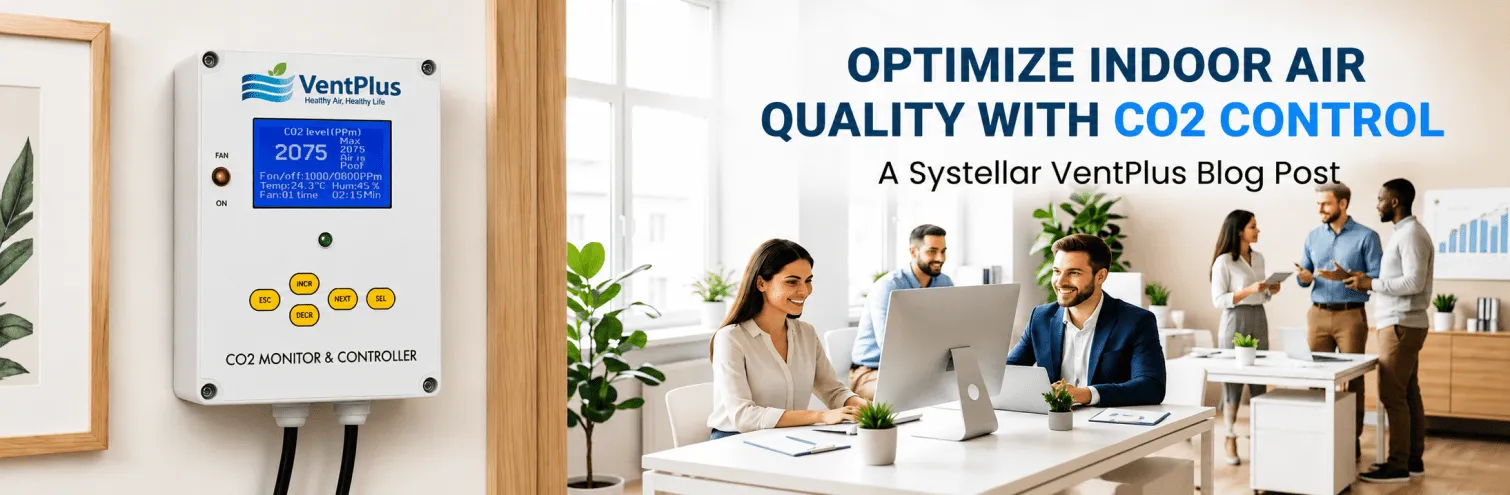
We spend over 90% of our time indoors — in homes, offices, and classrooms — yet most of us never think about the air we are actually breathing. One of the most overlooked factors in indoor air quality is carbon dioxide (CO2). High CO2 builds up silently: no smell, no visible smoke, but it causes real effects — stuffiness, headaches, poor concentration, and disrupted sleep. If you have ever felt inexplicably tired or foggy in a closed room, elevated CO2 may be the reason. This guide explains exactly how to check CO2 levels in a room, what the readings mean, and what you can do to keep your indoor air healthy.
Why Monitoring CO2 Levels Matters
CO2 is a natural part of the air we breathe, but indoors, it can accumulate quickly due to human respiration and inadequate ventilation. When CO2 levels rise beyond certain thresholds, it can negatively affect cognitive function and well-being. That’s why understanding CO2 ppm levels (parts per million) is crucial for healthy indoor environments.
Typical outdoor CO2 levels hover around 400 ppm. Indoors, anything below 800 ppm is generally considered good, while 800-1000 ppm is moderate. Levels above 1000 ppm indicate poor ventilation, and anything beyond 2000 ppm can be harmful, causing drowsiness and impaired decision-making.
In Indian homes and offices, the problem is more acute than in Western climates. We seal rooms tightly against heat, dust, and noise — running air conditioning for hours with windows shut. This traps CO2 from human respiration with no way to escape. A bedroom with two sleeping adults in a sealed AC room can cross 1,500 ppm within two to three hours. A classroom of 30 students with poor ventilation can reach 2,000 ppm by mid-morning. These are not extreme scenarios — they are everyday Indian realities that a simple CO2 monitor can reveal and help you fix.
How to Check CO2 Level in a Room
The easiest and most accurate way to check CO2 levels in a room is by using a dedicated CO2 monitor. These devices provide real-time readings of CO2 concentration, usually displayed in ppm, along with additional parameters like temperature and humidity.
To get an accurate reading, place the monitor in the breathing zone—about 3 to 6 feet above the floor—and away from windows or vents that might skew measurements. Wait a few minutes for the device to stabilize, then read the displayed CO2 ppm level to assess your room’s air quality.
For the most reliable reading, take measurements at three times: early morning before activity begins (this gives your baseline), mid-afternoon during peak occupancy, and late evening. If levels consistently exceed 1,000 ppm during occupancy, your room needs better ventilation. If they exceed 1,000 ppm even at night with AC running, your air conditioning system’s fresh air intake may be blocked or undersized.
How to Measure CO2 Levels in a Room Effectively
Measuring CO2 levels involves more than a quick glance at a number. For meaningful air quality management, continuous monitoring throughout the day is what gives you actionable data. A one-time reading tells you the situation right now; continuous monitoring tells you when levels peak, how fast CO2 builds up, and whether your ventilation is actually working.
A modern CO2 monitor and controller like the VentPlus unit (shown below) combines reliable sensing technology with automatic ventilation control. It not only measures CO2 ppm levels but also activates fans or ventilation systems when thresholds are exceeded, ensuring your indoor air remains fresh without manual intervention
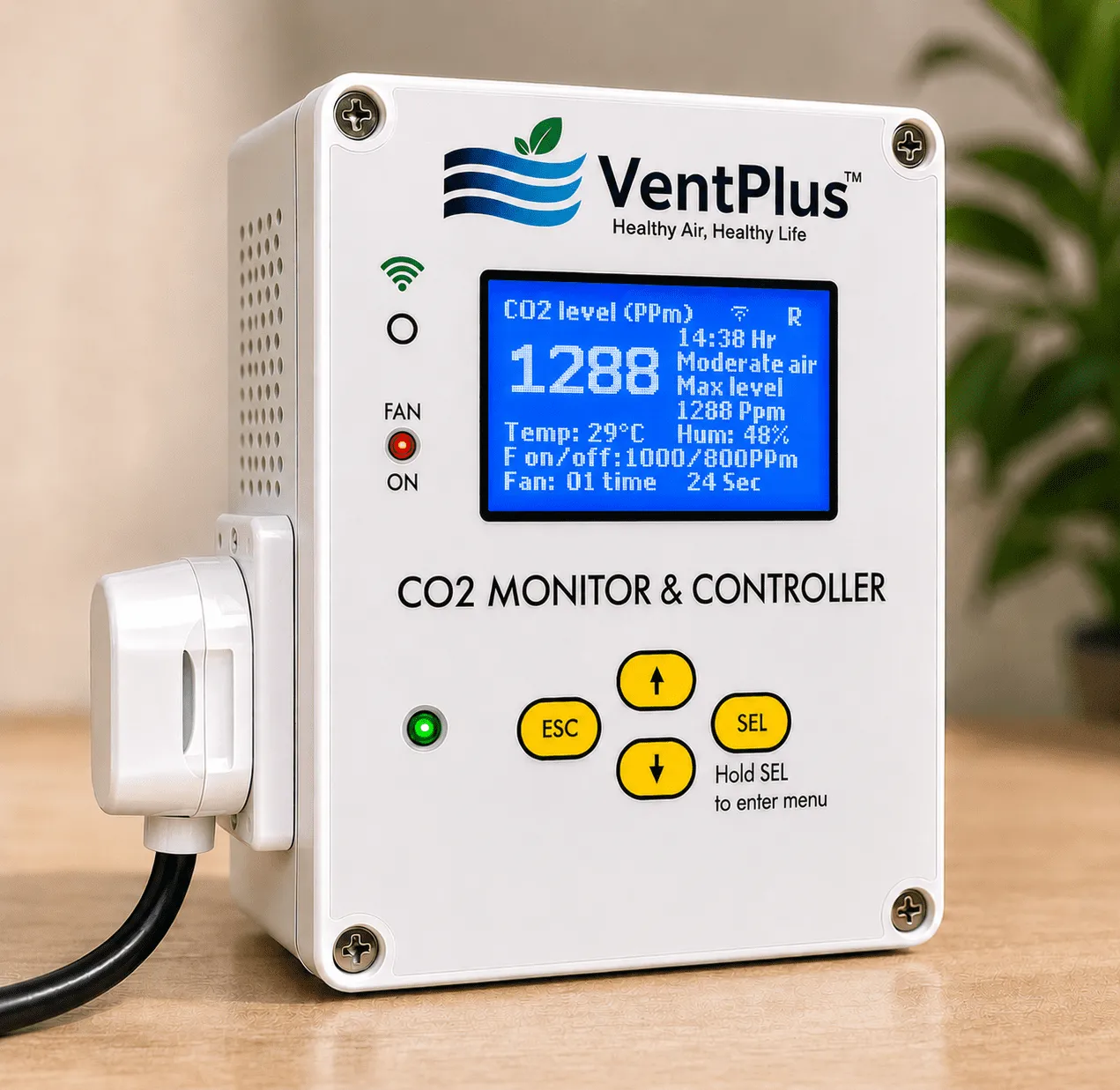
CO2 monitor + controllers (automatic): These combine the sensor with a relay output that can directly switch on an exhaust fan, ventilation unit, or fresh air intake when CO2 exceeds your set threshold — and switch it off when levels return to normal. No manual intervention needed. This is the approach recommended for bedrooms, home offices, and classrooms where you want continuous protection without constant attention.
Understanding CO2 ppm Levels
CO2 monitors typically display the level in ppm—parts per million—which quantifies how many CO2 molecules exist per million molecules of air. Here’s a quick reference to what these values generally mean indoors:
- 400-600 ppm – Excellent: Excellent air quality with good ventilation.
- 600-1000 ppm – Good: Acceptable but ventilation could be improved.
- 1000-1500 ppm – Moderate: Reduced alertness and decline in concentration.
- 1500-2500 ppm – Poor: Onset of drowsiness and poor decision making.
- 2500-4000 ppm – Very Poor: Feeling of suffocation and sluggish thinking.
- Above 4000 ppm – Severe: Fatigue, headache, Nausea.
By keeping an eye on these numbers, you can make informed decisions about opening windows, turning on ventilation fans, or using air purifiers.
Signs Your Room CO2 Is Too High — Even Without a Monitor
Your body often signals elevated CO2 before you have data to confirm it. Watch for these patterns:
- You feel unusually sleepy or foggy in a specific room, even after a full night’s sleep
- Concentration drops noticeably during work or study sessions in a closed room
- Multiple people in the same space feel sluggish at the same time — a classic indicator that it is the environment, not the individuals
- Headaches that appear in the afternoon in a sealed AC room and disappear after you step outside
- The room feels “stuffy” even though it appears clean — no dust, no smell, just heavy air
These are consistent with CO2 levels crossing 1,000–1,500 ppm. The fix is not just opening a window occasionally — it is knowing your levels and managing ventilation automatically.
How VentPlus Monitors and Controls CO2 Automatically
Once you understand the problem, the practical question is: how do you maintain safe CO2 levels without constantly watching a monitor or remembering to open windows?
The VentPlus CO2 Monitor and Controller by Systellar Innovations is designed to answer that question. It is a Made-in-India device that combines real-time CO2 measurement with automatic ventilation control — purpose-built for Indian homes, offices, and classrooms.
What VentPlus does:
- Continuously measures CO2 concentration in your room in ppm
- Displays live readings so you always know your current air quality
- When CO2 crosses your set threshold (e.g. 1,000 ppm), it automatically switches on a connected exhaust fan, fresh air unit, or ventilation system
- When CO2 returns to safe levels, it switches the ventilation off — saving energy and avoiding over-ventilation
- Works silently in the background, 24 hours a day, without any manual intervention
VentPlus is particularly suitable for:
- Bedrooms — protect your sleep quality in sealed AC rooms
- Home offices — maintain concentration during long work-from-home sessions
- School classrooms — CO2 builds up rapidly with 30+ students; automatic control prevents the post-lunch drowsiness that teachers and students experience daily
- Conference rooms — sealed meeting rooms routinely exceed 1,500 ppm within 30 minutes of occupancy
- Greenhouses — CO2 control directly affects plant growth rates
Designed and manufactured by Systellar Innovations in Meerut, Uttar Pradesh, VentPlus brings industrial-grade indoor air quality management to everyday Indian spaces at an accessible price.
→ View VentPlus specifications, features and pricing
Frequently Asked Questions
What is a safe CO2 level in a room?
A CO2 level below 800 ppm is considered good for indoor spaces. Levels between 800–1,000 ppm are acceptable but ventilation should be improved. Above 1,000 ppm, cognitive performance begins to decline, and levels above 2,000 ppm can cause physical discomfort and health effects.
How do I check CO2 levels in my room at home?
The most accurate method is to use a dedicated CO2 monitor. Place it at breathing height — about 3 to 6 feet above the floor — away from windows and vents. Allow 2–3 minutes for the reading to stabilise. For ongoing protection, a CO2 controller like VentPlus can automatically manage ventilation based on live readings.
Can high CO2 levels in a room make you sick?
High CO2 does not cause illness directly, but sustained exposure above 1,000 ppm reduces cognitive performance, alertness, and concentration. Above 2,000 ppm, symptoms include headaches, drowsiness, and difficulty breathing. Chronic exposure to poorly ventilated spaces is associated with Sick Building Syndrome.
How quickly does CO2 build up in a sealed room?
Faster than most people expect. A sealed bedroom with two adults sleeping can cross 1,300 ppm within 1–2 hours. A classroom of 30 students can reach 2,000 ppm within 45–60 minutes without active ventilation. This is why continuous monitoring — rather than occasional spot checks — is the recommended approach.
Does an air purifier reduce CO2 levels?
No. Air purifiers filter particles (dust, allergens, PM2.5) and sometimes VOCs, but they do not remove CO2. The only way to reduce CO2 in a room is ventilation — bringing fresh outdoor air in. A CO2 controller like VentPlus automates this by activating ventilation precisely when CO2 levels rise.
Final Thoughts
Healthy indoor air quality starts with knowing what you are breathing. Learning how to check CO2 levels in a room is one of the simplest and most impactful things you can do for your family’s health, productivity, and sleep quality. The CO2 ppm chart above gives you the knowledge; a device like VentPlus gives you automatic control — so you never have to worry about it again. For ventilation standards and guidelines, the ASHRAE Standard 62.1 is the international reference for acceptable indoor air quality.